September 27, 2026
Passphrase vs. Random Password: Which Is Actually More Secure?
A long passphrase of random dictionary words and a shorter random string of mixed characters can have identical entropy — security comes down to total bits of randomness, not which style you use. A 4-word passphrase from a 7,776-word list (like Diceware) has about 51 bits of entropy; a 12-character fully-random password using upper, lower, digits, and symbols has around 78 bits. Neither style is inherently more secure — it depends entirely on length and the size of the pool each character or word is drawn from.
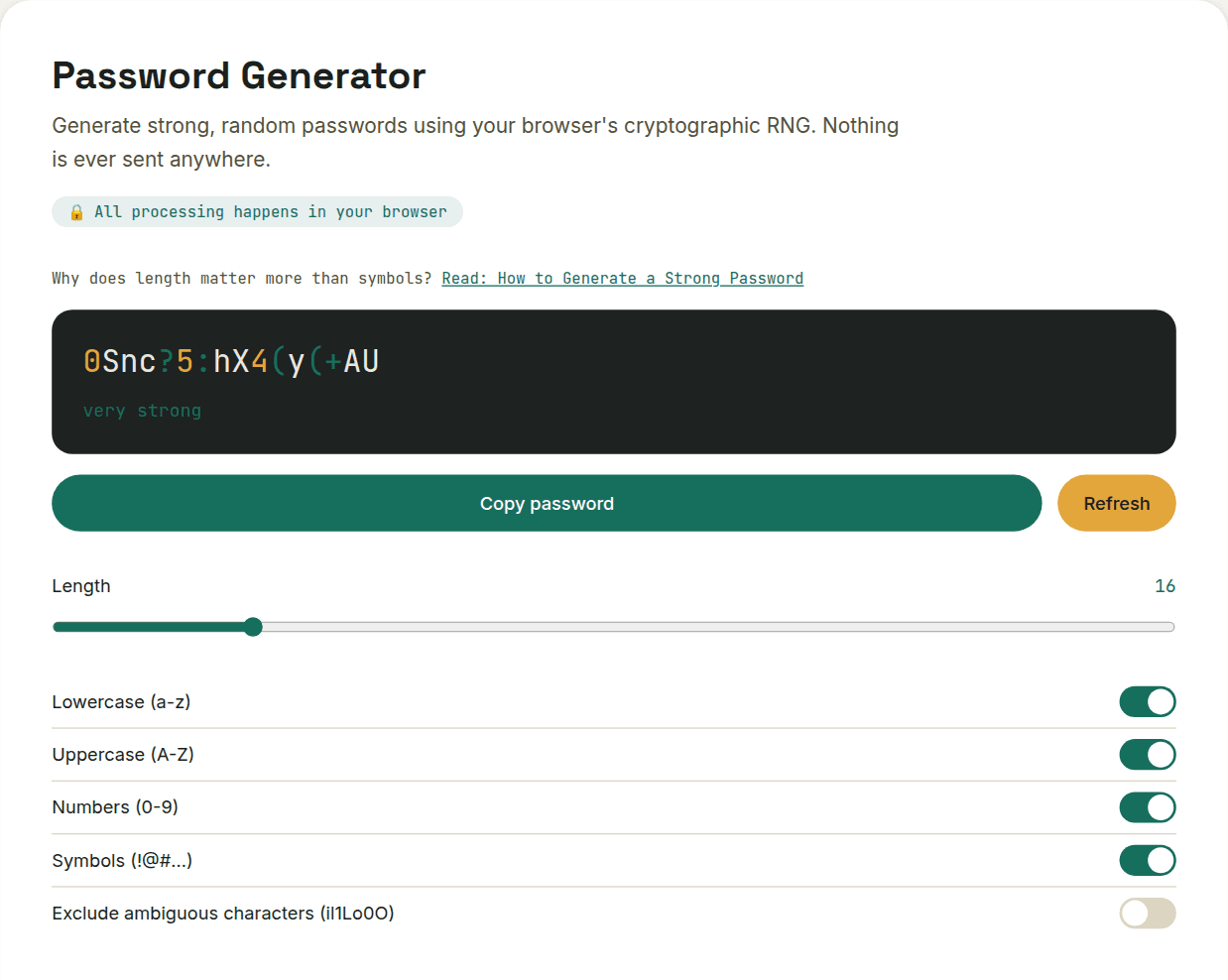
How the math actually works
Entropy is log2(pool size) multiplied by the number of characters or words. A random password drawing from a 94-character pool (all printable ASCII) gets about 6.55 bits per character. A passphrase drawing from a 7,776-word Diceware list gets about 12.9 bits per word — but a word averages 4-8 characters, so per-character it's actually less dense than random characters. The passphrase wins on memorability, not on raw bits-per-keystroke.
Why passphrases became popular anyway
- Genuinely easier to memorize without writing down — 5 random words beats 16 random characters for most people's actual recall
- Easier and faster to type accurately, especially on mobile keyboards where symbol characters require switching keyboard layers
- Still need enough words — a 2-word passphrase is weak regardless of the word list; 5-6 words is the realistic minimum for real security
Why random passwords still make sense
If you're using a password manager — which you should be, for anything beyond your master password — memorability stops mattering entirely, and a fully random password packs more entropy per character into a shorter string. The passphrase-vs-random debate is really only relevant for the handful of passwords you actually need to memorize: your device lock, your password manager's master password, and not much else.
Want to try this yourself?
Open Password Generator →