September 25, 2026
JSON Schema Validation vs. Syntax Validation: What's the Difference?
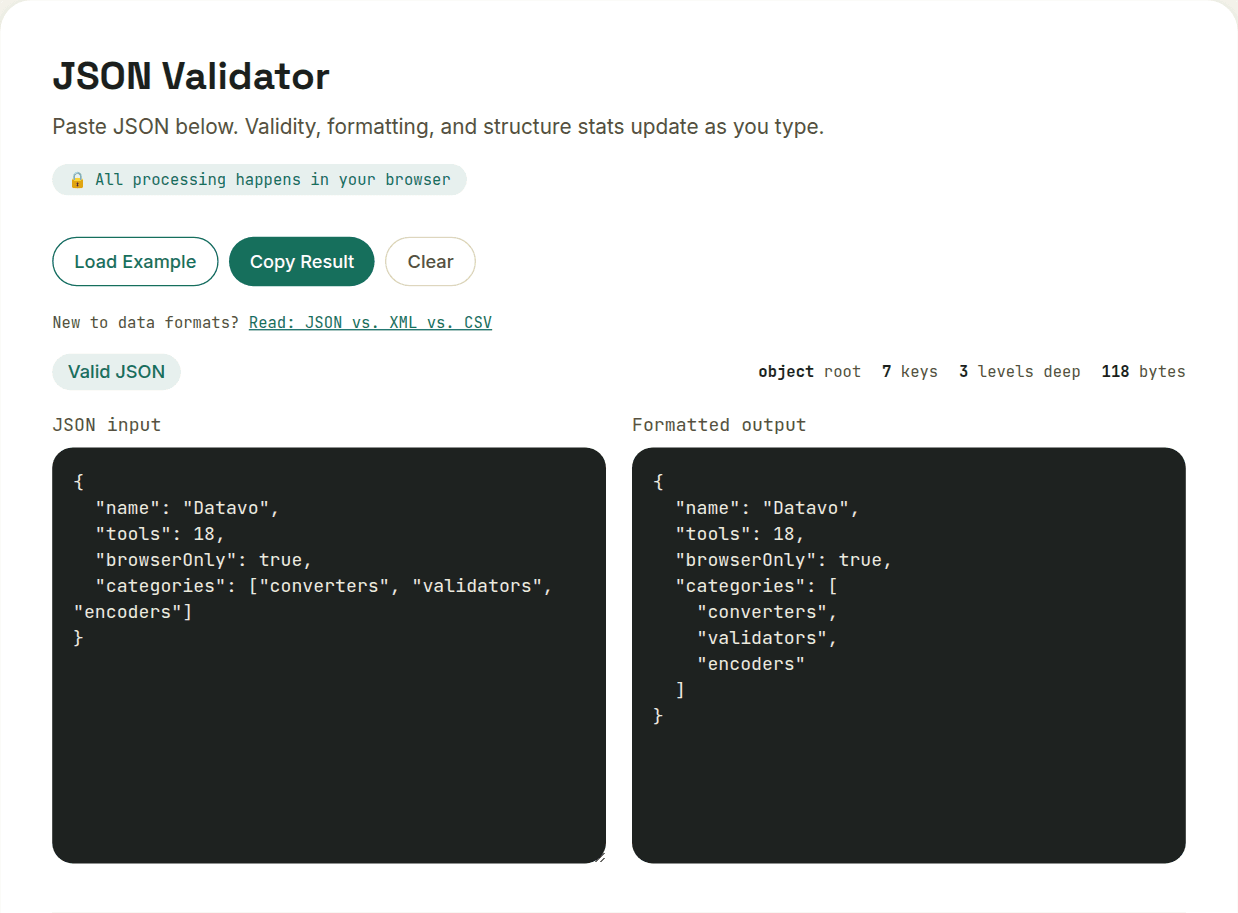
Syntax validation checks that a JSON document is well-formed and parseable — correct brackets, quoted keys, no trailing commas. Schema validation checks something stricter: that the parsed data actually matches an expected shape — required fields present, correct types, values within allowed ranges. A document can pass the first and completely fail the second.
What syntax validation actually catches
This is the layer a JSON validator (or any JSON.parse() call) checks: is every string quoted, every object bracket matched, every comma in the right place, no trailing comma after the last item. It answers one question — can this text be turned into a JavaScript object at all — and nothing about whether that object makes sense for your application.
What schema validation adds on top
JSON Schema (the actual specification, at json-schema.org) lets you describe the shape data must have: which fields are required, what type each one is, numeric ranges, string patterns, enum values, array length constraints. A document like {"age": "twelve"} is perfectly valid JSON syntax — but fails schema validation the moment your schema says age must be a number.
- Syntax validation answers: "is this parseable?"
- Schema validation answers: "does this match what my application expects?"
- You need both — schema validation always assumes syntactically valid JSON as its starting point
Where each one belongs
Syntax validation is cheap and universal — run it on anything before you try to parse it, whether that's a config file, an API response, or a value you're about to save. Schema validation is more expensive to set up (you have to actually write the schema) and belongs at trust boundaries specifically: validating an incoming API request body, or a config file before your app starts using it. Validating internal data your own code already produced and controls is usually unnecessary overhead.
Want to try this yourself?
Open JSON Validator →